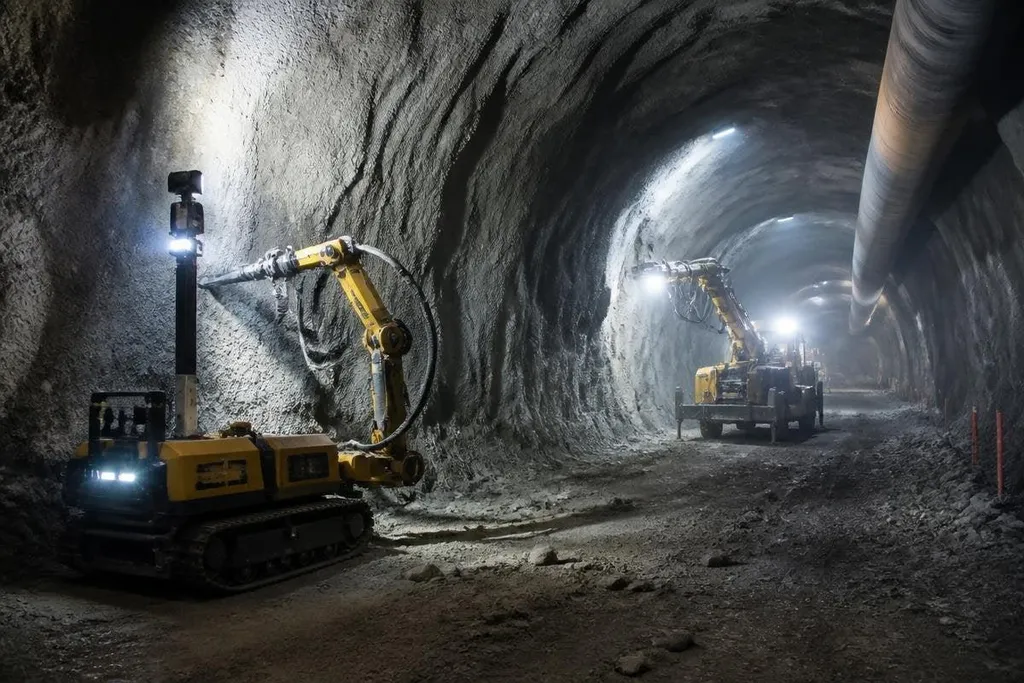
An underground city would need more than a tunnel and a power line.
The machines could map rock, move material, inspect walls, and work where heat, dust, water, or falling debris put people at risk.
The hard part is coordination. Each machine would need to work from the same map while engineers check the ground, control access, and keep escape routes open.
Quick read
- Possible tasks include mapping, drilling support, material transport, and inspection in underground work areas.
- Reliable communications, fresh air, power, and safe recovery plans would be needed.
- People would still make the main decisions because ground conditions can change without warning.
What the robots would do first
Construction would start with a map, not a building. A robot carrying LiDAR could scan walls and ceilings, using laser measurements to build a three-dimensional view of the space. Other sensors could help find water, loose rock, heat, and gas.
That map would guide the next machines. A drilling or cutting system could remove rock along a planned route, while a transport robot could carry broken material to a loading area. An inspection robot could then check the new section before people enter it.
The order matters. A map that is several hours old may be wrong after drilling changes the rock or opens a water path. The system would need to update its map as work continues and send warnings when the ground no longer matches the plan.
Why underground work is hard for robots
An underground site blocks radio signals and limits room for movement. A robot may lose contact around a bend, meet a damaged floor, or find that a route is too narrow after equipment has moved through it.
Local sensors could keep a robot working when a network link drops, while an operator takes over when the task reaches a risky section. Physical cables, relay stations, and short-range wireless links could keep data moving through the work area.
Air creates another limit. Dust can affect cameras and moving parts. Heat can shorten battery life. Water can damage electronics unless the robot has the right enclosure and seals. Ventilation would need to serve the machines and the people who inspect their work.
Dust, heat, water, and ventilation turn underground excavation into a systems job. A report from Robot24 can place a named robot, tunnel task, and test result beside claims about automated construction. The next section asks what the machines and crews need after the digging ends.
A city needs more than excavation
A livable underground site would need power, water, waste removal, fire control, lighting, lifts, and several routes out. Robots could inspect pipes and cables after installation, but they would not remove the need for careful design.
The machines could also support repairs. A small crawler might check a pipe corridor after a pressure alarm. A mobile camera system could inspect a ceiling after ground movement. A hauling robot could move tools through a long passage and reduce the number of trips people make into the work area.
Yet the city would depend on systems that work during failure, not only during normal operation. A blocked route, dead battery, broken sensor, or damaged network must leave people with a clear way to reach the machine and leave the site.
The human control problem
Autonomous control works best when the robot can measure its surroundings and choose from known actions. Underground construction often includes changing rock, incomplete maps, and tasks that need a judgment about safety.
That points to a mixed system. Repeatable movement and inspection could go to robots, while people set work limits, review sensor data, and approve entry into new sections. Teleoperation would matter when the robot reaches a place its software cannot classify with enough confidence.
I’d treat underground cities as a long research project, not a near-term construction plan. The first useful systems will probably work in small, controlled areas before anyone trusts them with a connected public space.
A practical test before construction
Use this checklist to judge a proposed underground robotics plan:
- Map quality: Can the system update its three-dimensional map after each excavation step?
- Communication: Does the robot keep working safely when the main network link fails?
- Ground checks: Which sensors detect loose rock, water, heat, dust, and gas?
- Recovery: Can a second machine or a person reach a disabled robot?
- Power: How will the site charge, swap, or retrieve batteries without blocking work?
- Exit routes: Can people leave if ventilation, power, or communications stop?
A small underground transport route with clear access may be a sensible early test. A full city would need years of work across excavation, safety, utilities, and public planning before robots could build and maintain it without constant human direction.